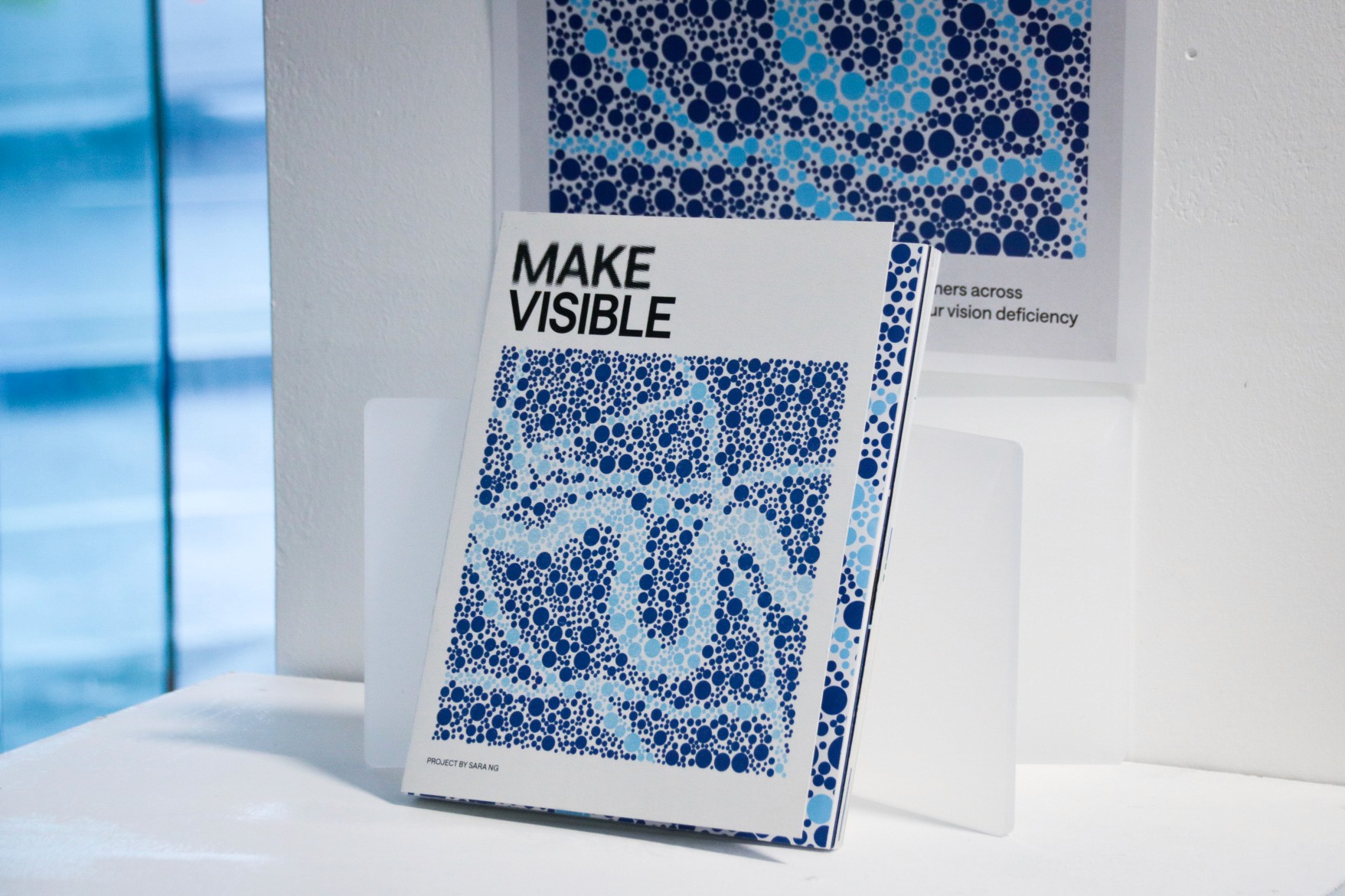
MakeVisible
An empathy-led service empowering urban practitioners across disciplines to design inclusive public spaces for colour vision deficiency
This project was delivered as part of my study at UAL.
Project Type
Service Design
Year
2025
Origin
United Kingdom
Client / Collaborator
Urban Practitioners & CVD Individuals
Role
Designer, Researcher, Facilitator
MakeVisible is an empathy-led service designed to help urban practitioners across disciplines to recognise and address sensory design blind spots, with a focus on Colour Vision Deficiency (CVD), It supports urban practitioners in embedding CVD inclusivity into their current workflows from the early design stages. By introducing awareness, empathy, and practical tools, the service aims to foster environments where people with CVD can fully engage with and appreciate urban aesthetics, ultimately enhancing their sense of inclusion and well-being.
PROBLEM LANDSCAPE
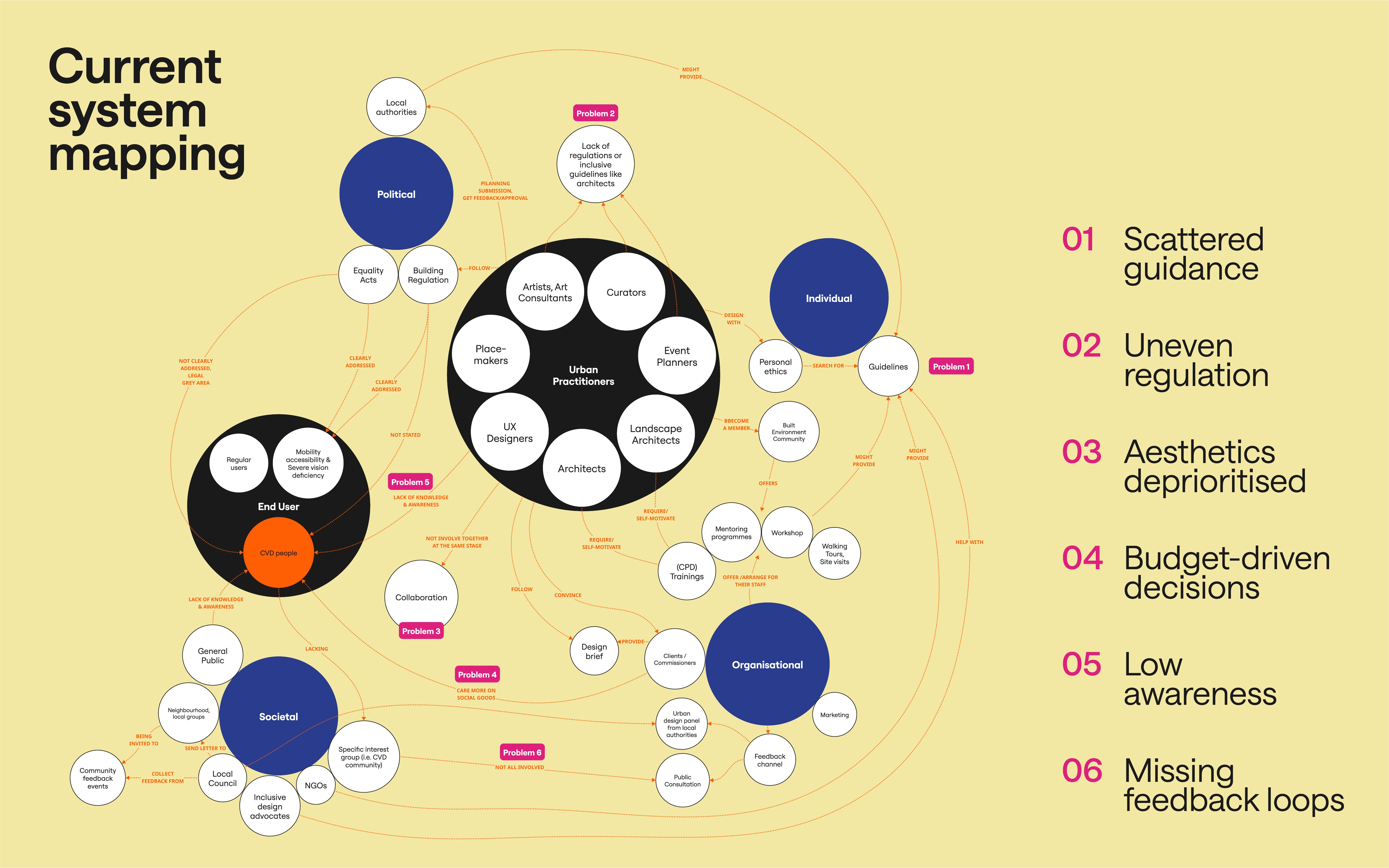
Inclusivity in the UK’s urban design process remains uneven, and most efforts still focus on mobility access rather than non-visible impairments such as Colour Vision Deficiency (CVD). While digital environments follow mature accessibility standards like WCAG, physical spaces lack equivalent guidance, which means CVD inclusion is rarely considered beyond safety requirements. As a result, CVD individuals can navigate cities but often cannot fully experience or interpret their aesthetic qualities, especially when colour is used without contrast or alternative cues. This sits within a wider system where guidance is scattered, regulations differ across disciplines, budgets prioritise efficiency over inclusion, and the voices of people with hidden impairments are rarely part of consultation or evaluation. These gaps show a clear need for tools and services that help practitioners embed sensory and aesthetic inclusion from the earliest stages of public realm design.
By focusing on the urban public realm, this project seeks to explore how cities can design beyond physical accessibility toward a more holistic form of inclusion that considers sensory and aesthetic experiences.
RESEARCH & PROCESS
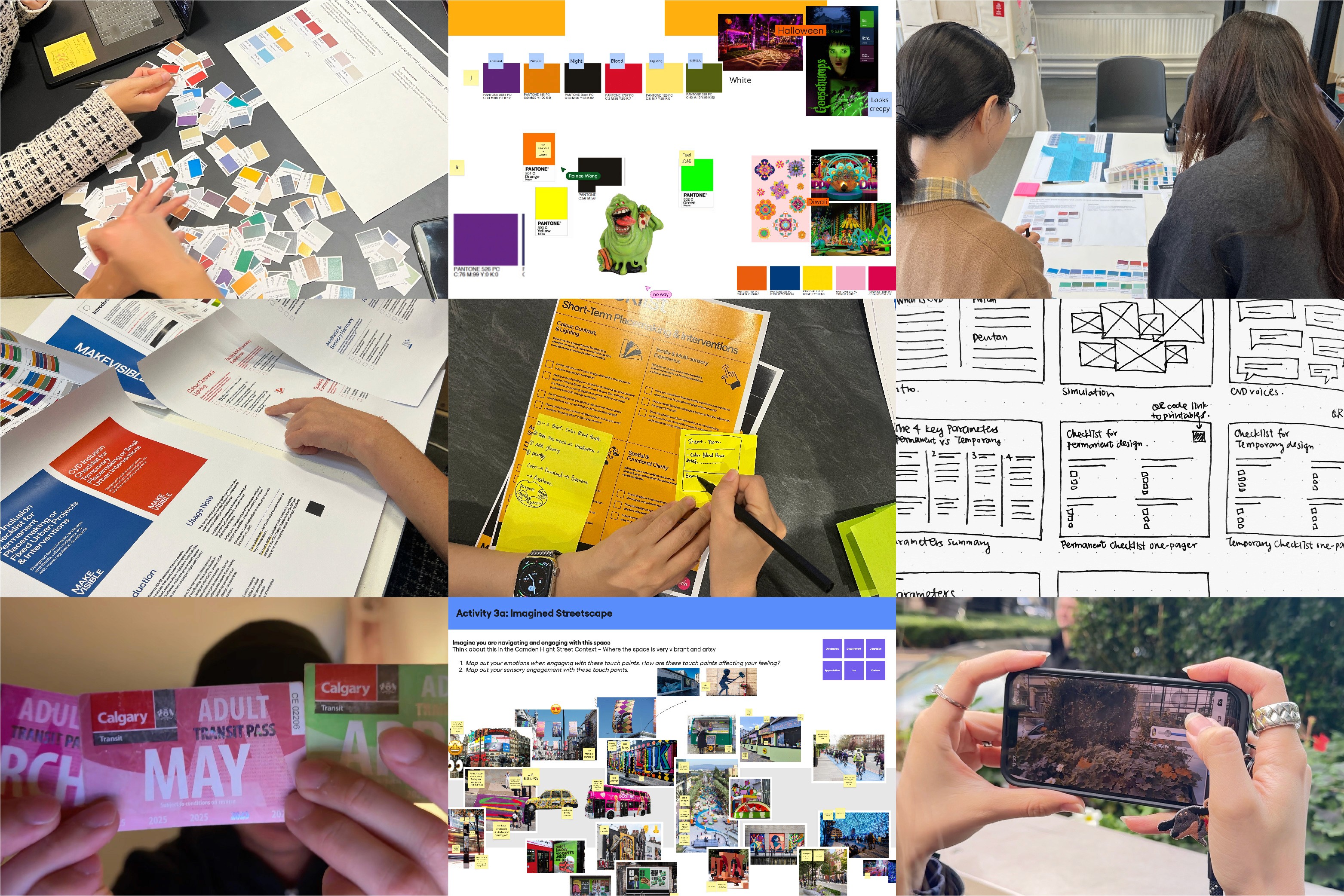
The project research combined primary and secondary methods to understand how inclusivity is currently practised in urban design and how people with CVD experience the city. This included site visits, literature reviews, digital ethnography, expert interviews, co-discovery workshops, and journaling exercises with people with CVD.
To ensure the service was grounded in lived experience rather than personal assumptions, I involved CVD users and urban practitioners as active co-designers throughout the research and design process. They had the power to define the problem, determine priorities, and validate or reject proposed solutions through collaborative workshops and prototype testing. By positioning them as decision-makers rather than informants, I worked to create shared ownership of the outcomes.
SERVICE OVERVIEW
The service operates through two main touchpoints:
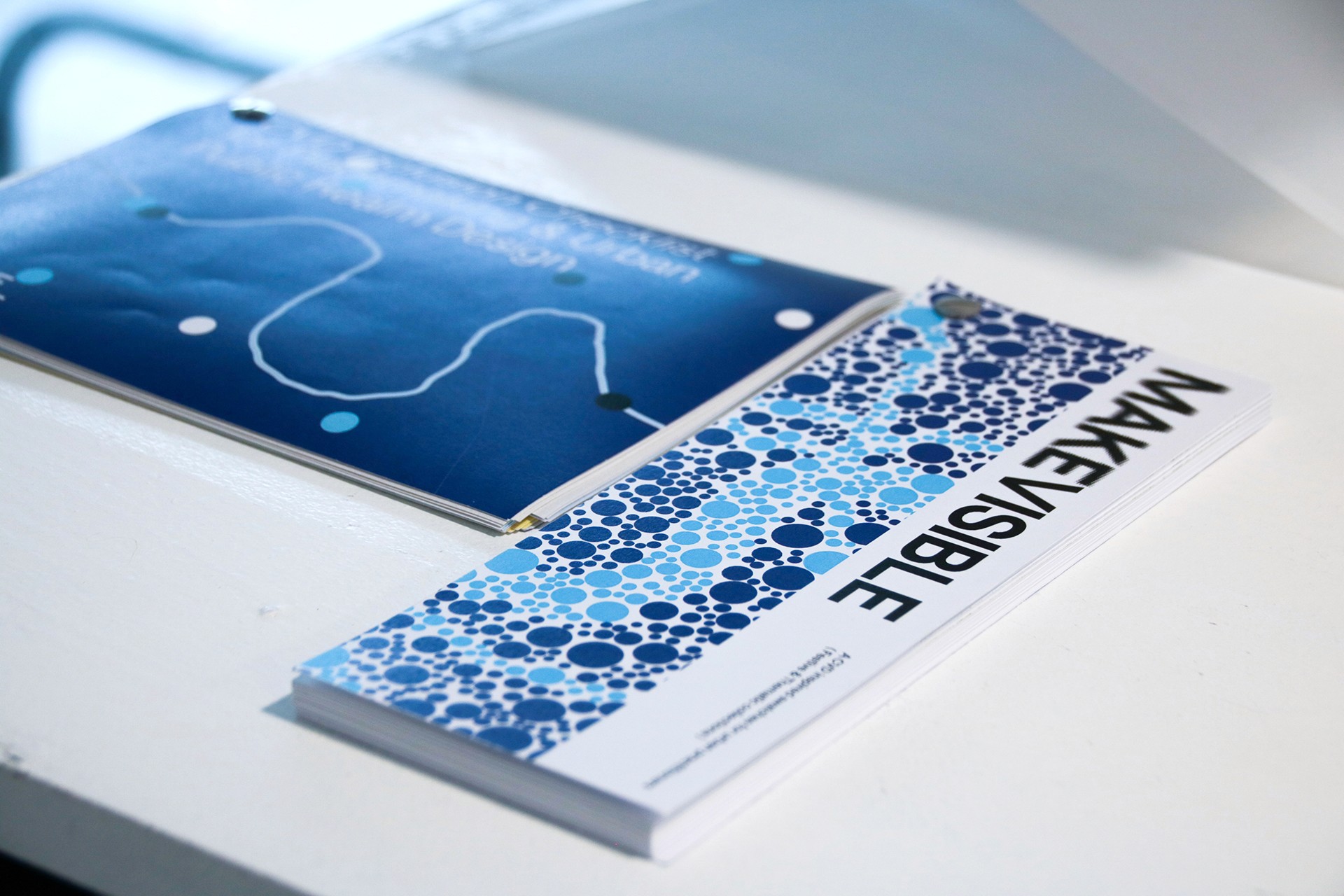
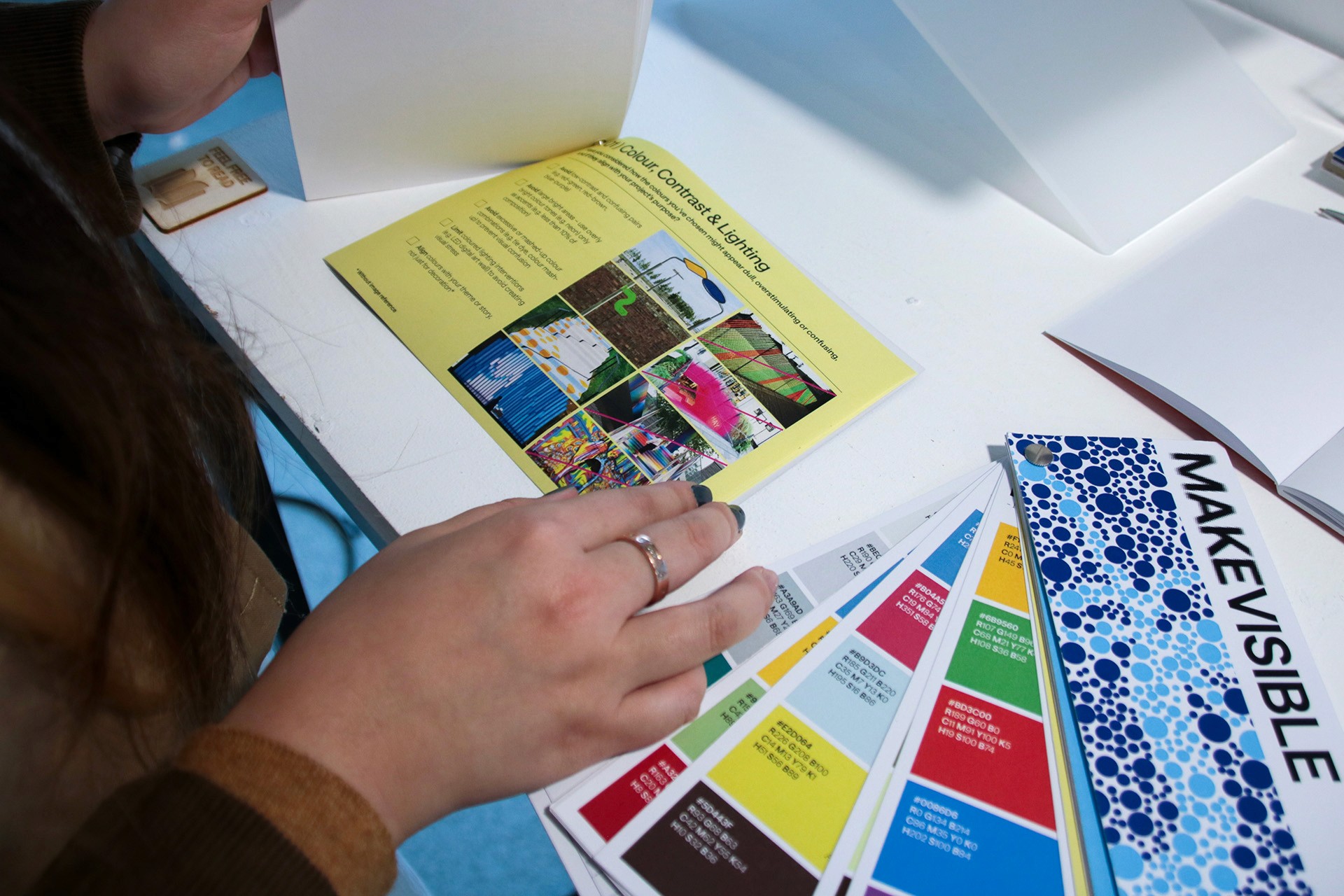
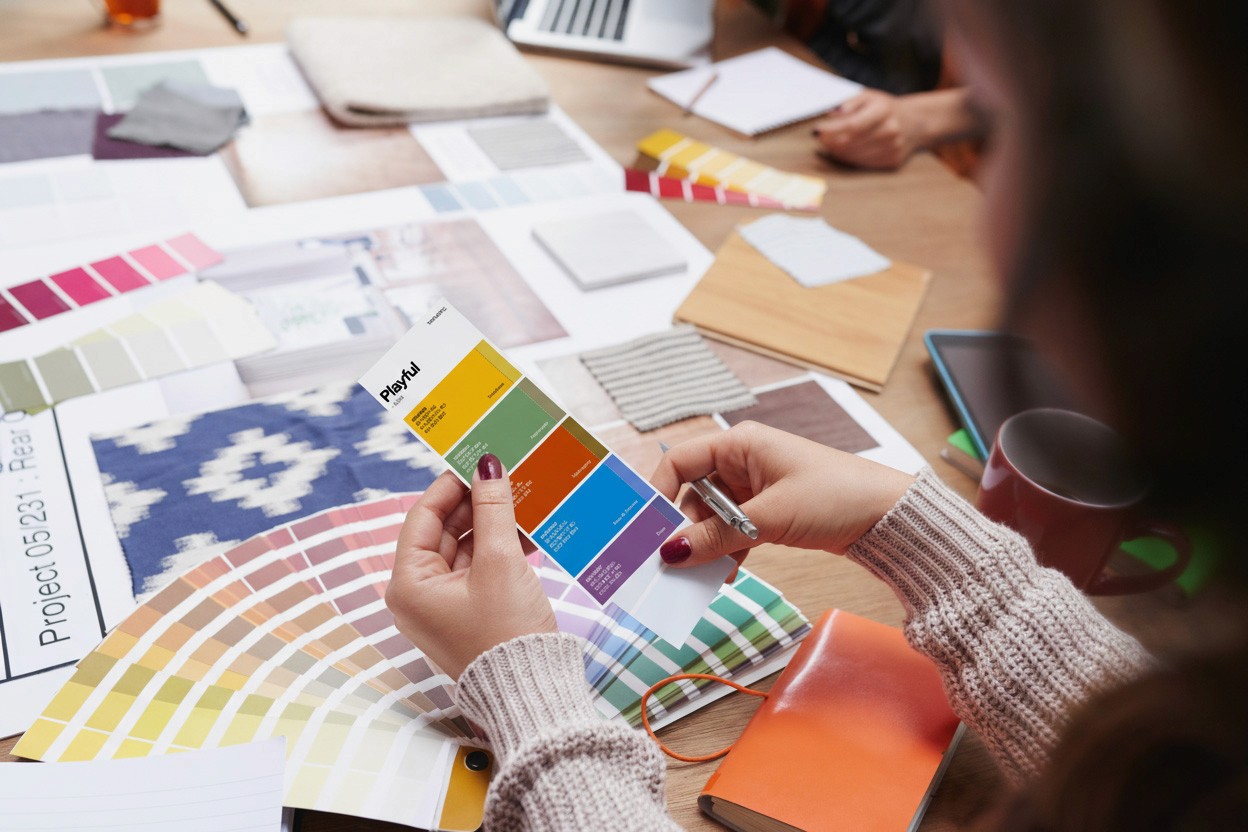
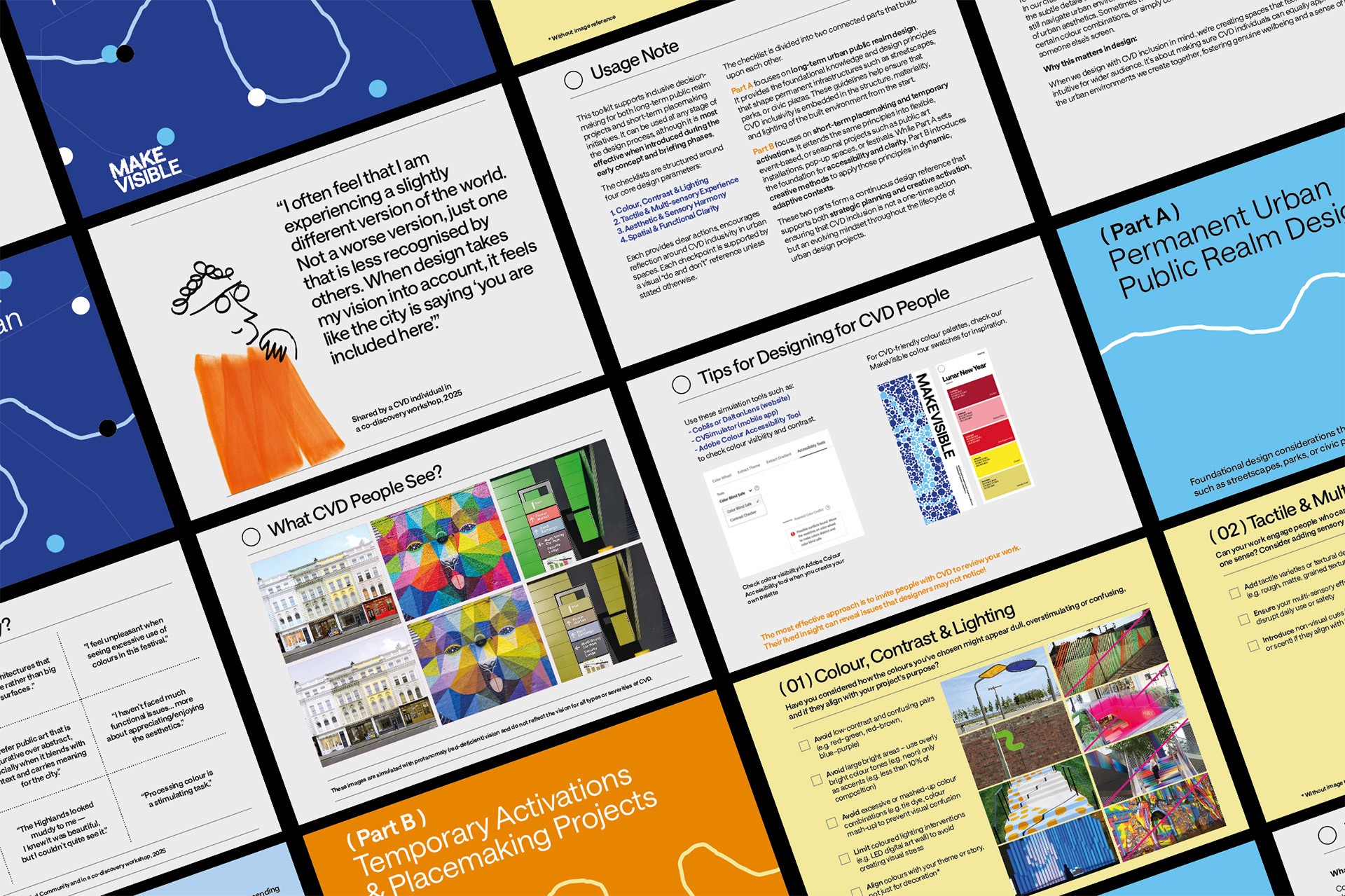
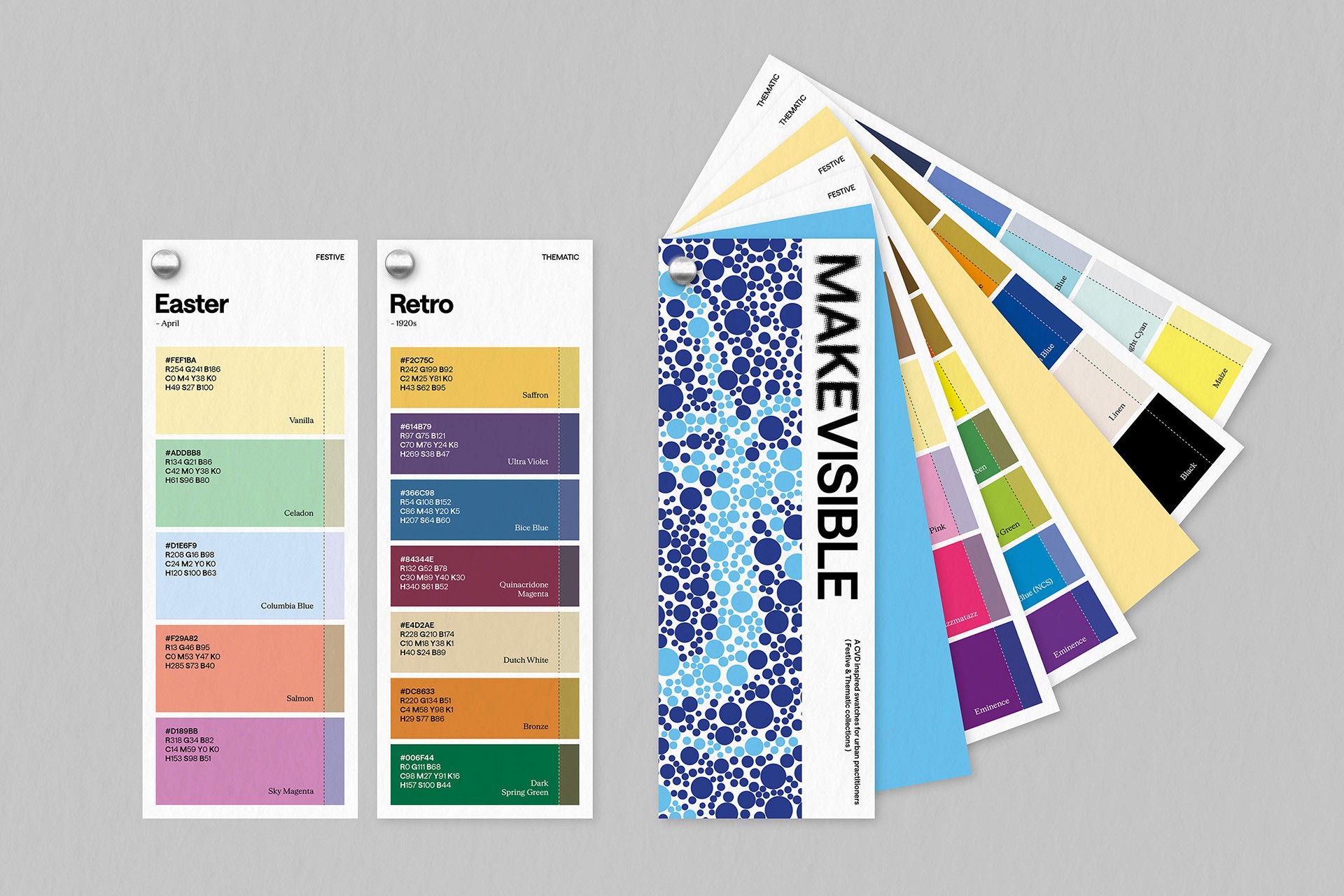
Practical tools – The CVD-inclusive design toolkit: A resource for use throughout the design process. Includes the empathy-led checklist and CVD-friendly swatch.
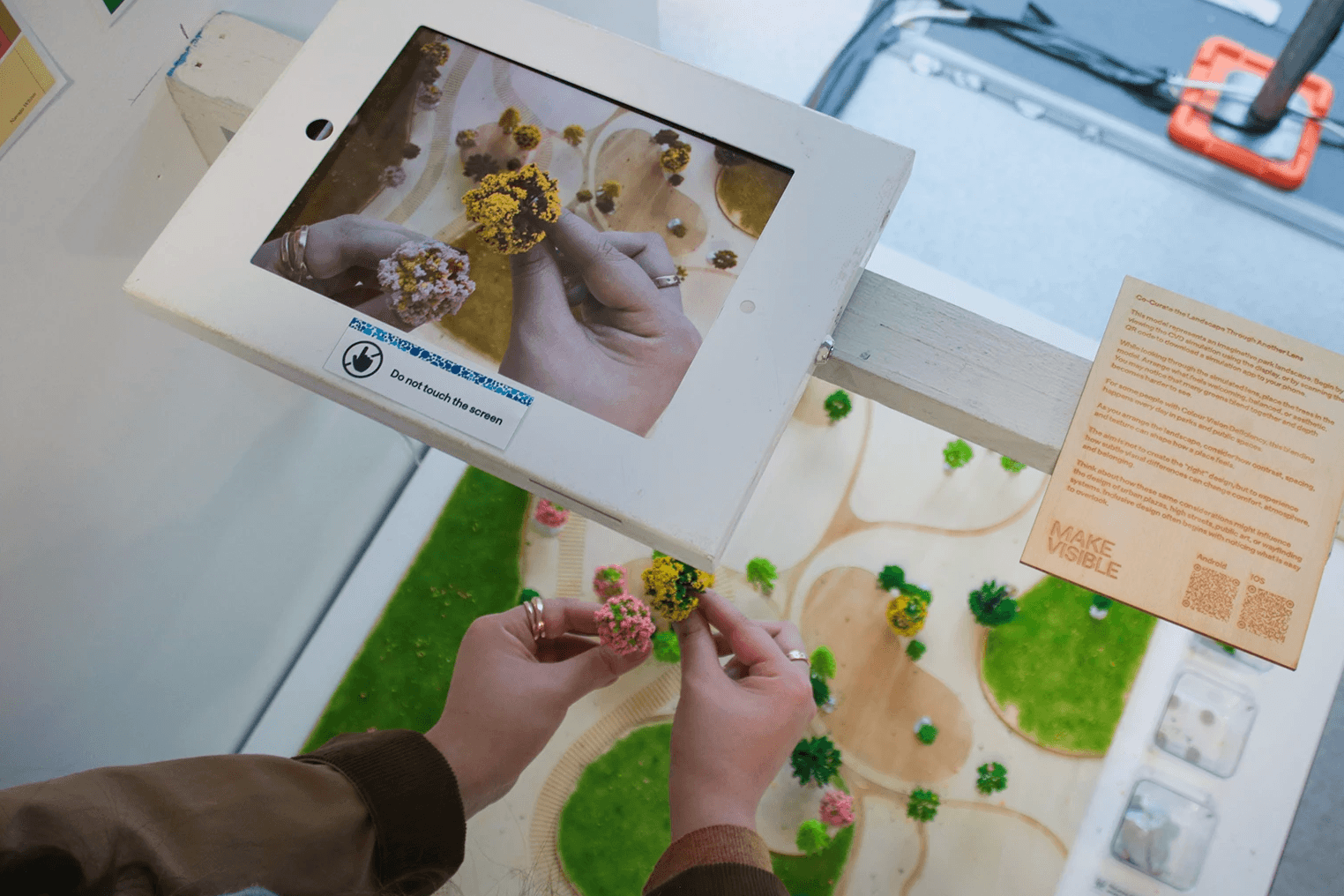
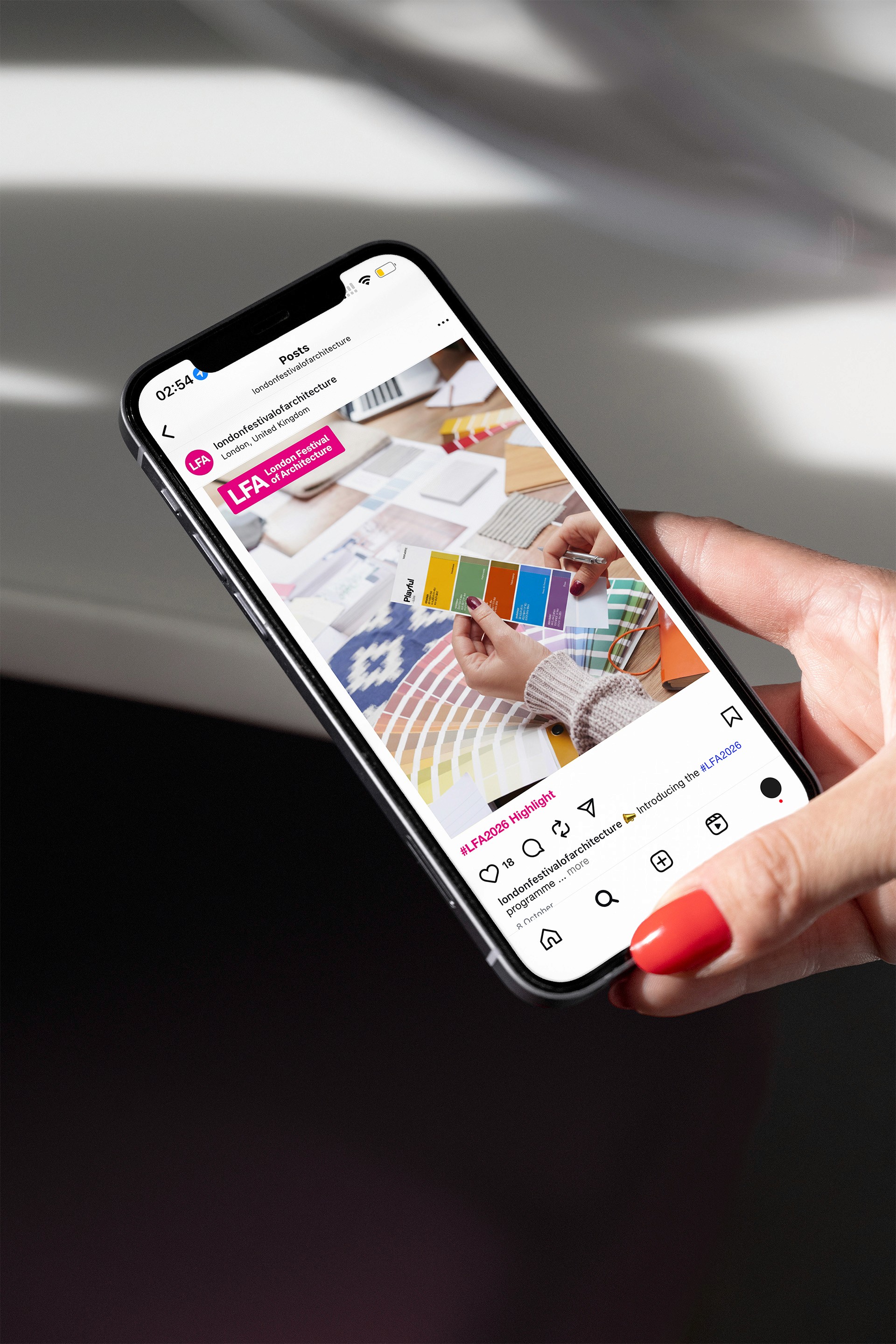
Awareness building – The empathy programme: A recurrent knowledge service delivered at key professional events (i.e. London Festival of Architecture), serving as an entry point where practitioners become aware of CVD inclusivity by introducing the toolkit through co-creation workshops and guided walking tours led by CVD individuals.
Service Provider: MakeVisible - the project team initiative; Long-term: New London Architecture (NLA) Team
• Deliver the toolkit and empathy programme
• Facilitate co-creation and knowledge sharing
• Promote CVD-inclusive design practices
Service Enabler: New London Architecture (NLA), in the London Festival of Architecture (LFA)
• Provide platforms for dissemination
• Host workshops and walking tours
• Integrate MakeVisible content into regular trainings or CPD programmes
Service User: Urban practitioners (Architects, landscape architects, art consultants, placemakers, event planners, etc.)
• Use the toolkit and empathy activities to design with CVD inclusivity in mind
• Apply inclusive principles within their projects and client discussions
Beneficiaries: Primarily people with CVD, and wider users of the urban public realm
• Experience more inclusive, comprehensible, and aesthetically engaging urban environments
RESULT & IMPACT
MakeVisible has begun shaping conversations about inclusivity within urban design, prompting practitioners to look beyond visible impairments and recognise non-visible differences as part of their professional responsibility. The real impact extends beyond the toolkit or workshops themselves. It fosters a mindset shift, encouraging practitioners to move from checkbox accessibility towards a design culture that genuinely celebrates sensory diversity. Looking forward, I envision MakeVisible growing beyond CVD to embrace other non-visible differences, fostering a more holistic understanding of inclusion in our built environment. I hope this project keeps inspiring cities to be shaped with empathy, curiosity, and genuine respect for the diverse ways people perceive and navigate their surroundings.
“Clients shape the direction of a project, but designers have the responsibility to lead with ethics and advocate for users who are not in the room. With stronger guidance, better case studies, and more inclusive consultation, we can help cities evolve into places that consider every way of seeing and experiencing.”
– Landscape Architect
“Tools that support quicker and more confident decision-making would be incredibly valuable for our work. Urban practitioners already understand the basics of accessibility, yet the landscape keeps evolving with new ideas and regulations. We need practical resources that help us navigate this complexity with ease.”
– Director of Placemaking, FutureCity
Next Projects

