Toilet Tells
Rediscover Hong Kong public toilet service & experience
This project was delivered as part of my work at One Bite Design Studio. The project was co-developed by a multidisciplinary studio team. The content presented here reflects my personal contribution and learning within that collaborative context.
Project Type
Service Design, Branding
Year
2020-21
Origin
Hong Kong
Client / Collaborator
FEHD & ArchSD
Role
Researcher, Designer, Workshop Helper
Toilet Tells – Rediscover Public Toilet was a government-led Design Thinking programme initiated by the Food and Environmental Hygiene Department (FEHD) and the Architectural Services Department (ArchSD) in Hong Kong. The project aimed to reimagine how public toilets are designed, managed and experienced by bringing citizens, professionals and government staff into a shared co-design process.
Over eight months, the programme engaged the public and frontline staff through workshops, field studies and design thinking activities to explore how public toilet services could better respond to real user needs. Rather than treating toilets purely as infrastructure, the project reframed them as a public service that reflects care, dignity and civic identity.
PROBLEM LANDSCAPE
Public toilets in Hong Kong are widely used but often under-valued. They are typically assessed by hygiene and maintenance standards alone, while the lived experience of users, cleaners and surrounding communities is rarely considered in design or planning decisions. This results in toilets that may meet technical requirements but fail to provide comfort, safety, dignity or ease of use for many people.
The service also struggles behind the scenes. Frontline staff work under demanding conditions with limited support, fragmented workflows and little recognition. Their challenges directly affect service quality, yet their voices are rarely included in planning or design decisions. At the same time, public toilets are often treated as isolated facilities rather than community assets, meaning their potential to contribute to neighbourhood wellbeing and city image is overlooked.
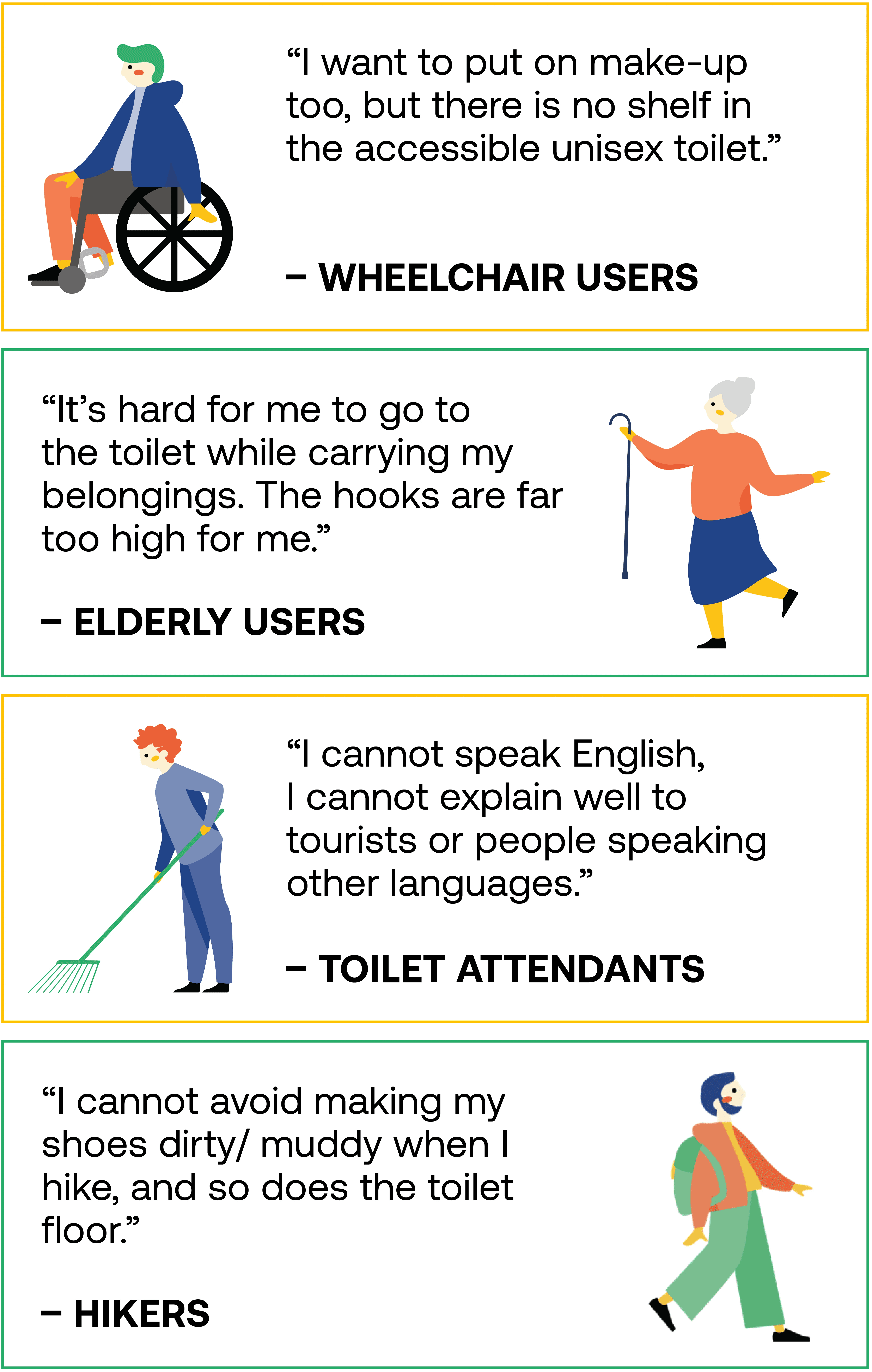
These issues are compounded by the diversity of users. Older adults, families with children, people with disabilities, cleaners, tourists and nearby residents all use the same facilities but with very different needs. The lack of a holistic service framework means these needs are often addressed in a scattered way.
RESEARCH & PROCESS
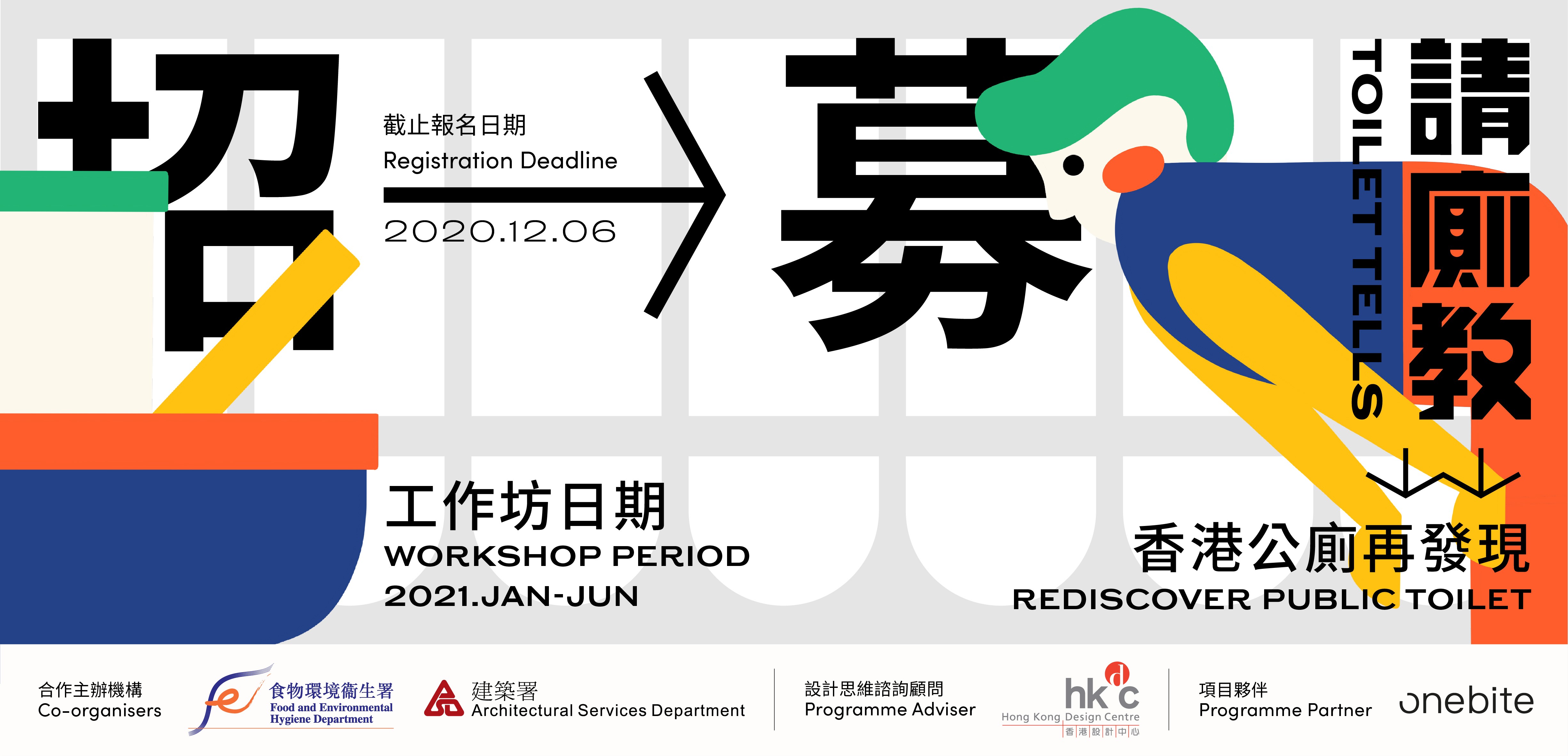
My role in this project focused primarily on branding and experience framing. I worked on shaping how the programme was positioned, named and communicated, helping translate a complex government-led initiative into something more accessible and human-centred for the public.
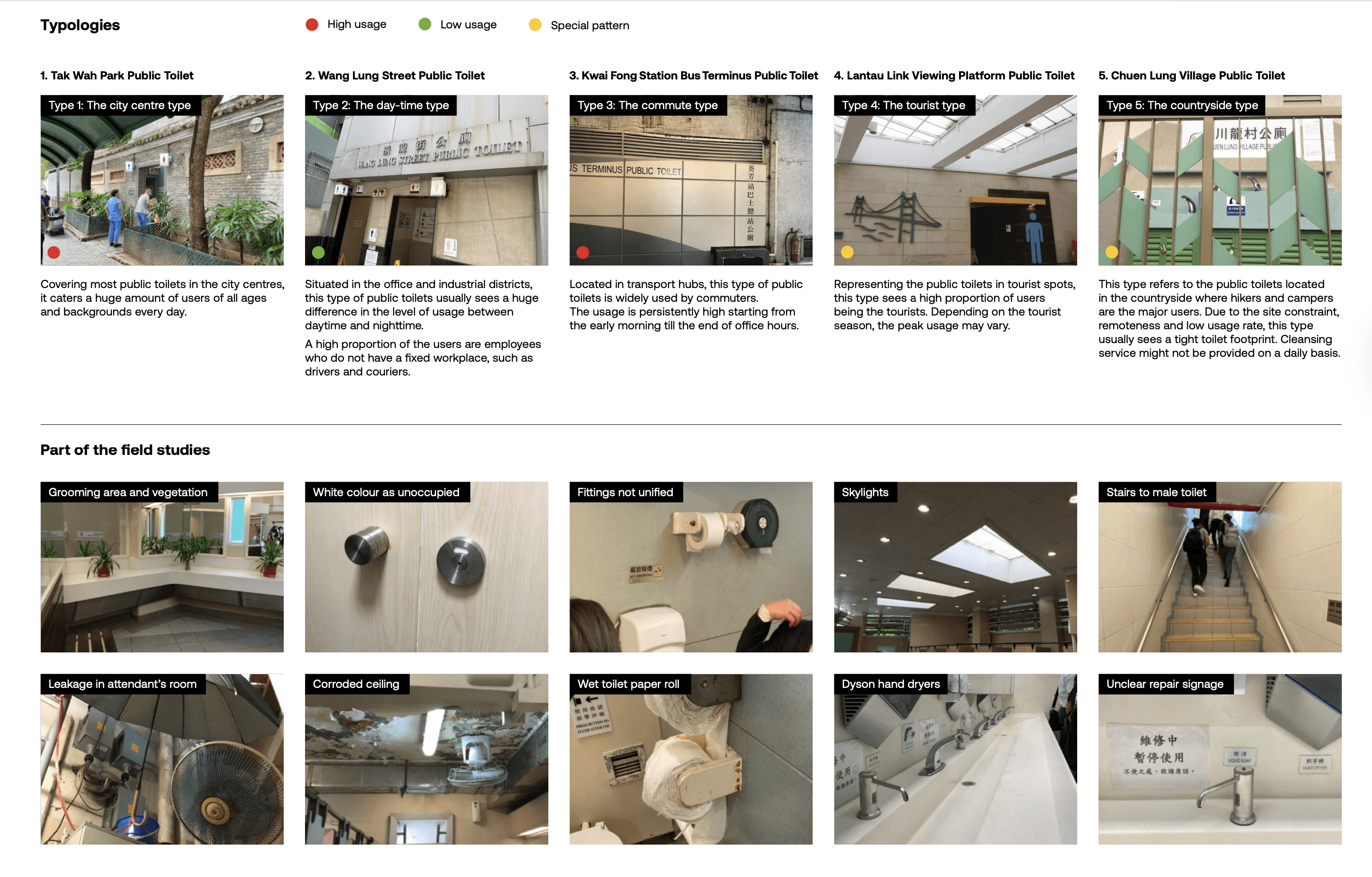
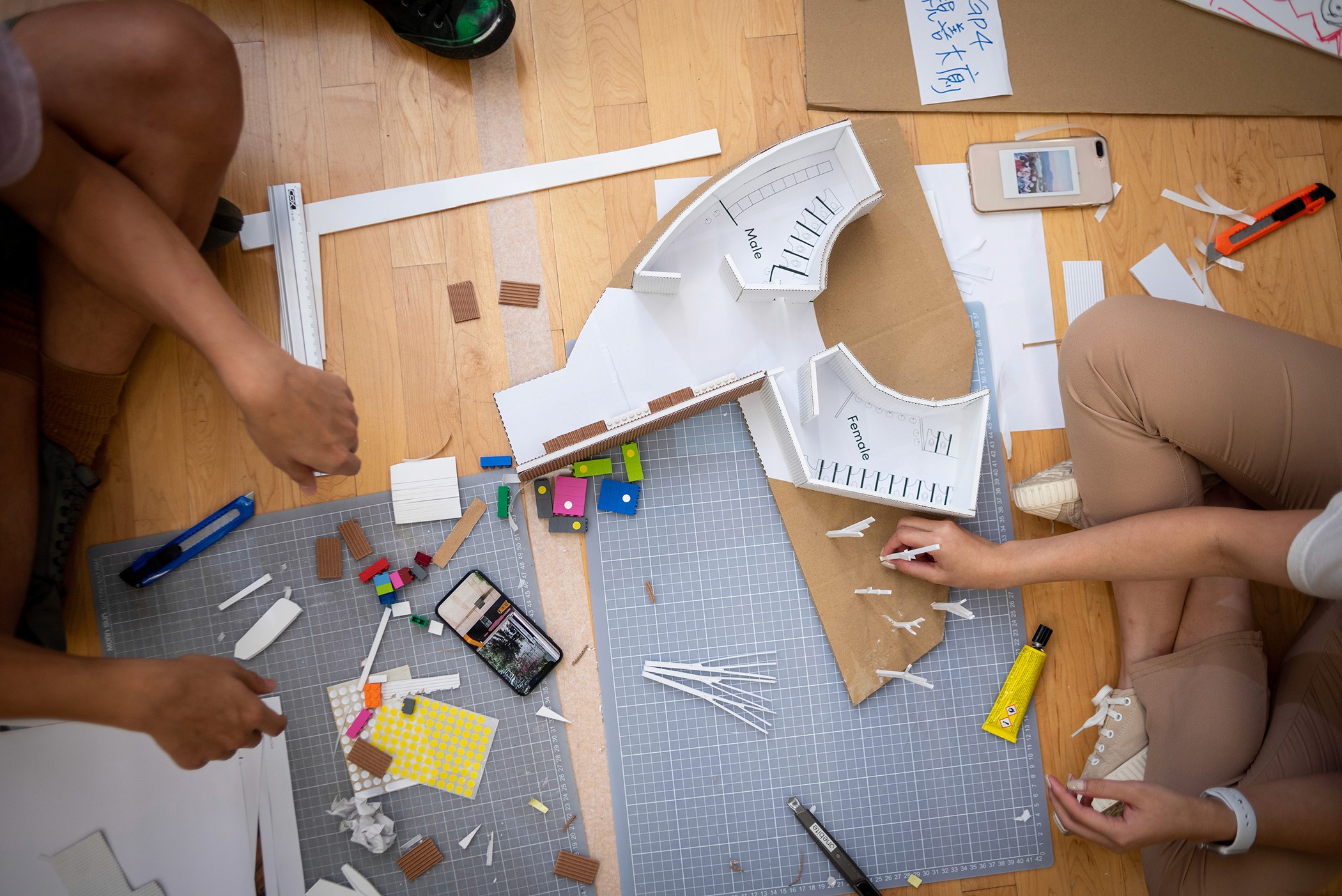
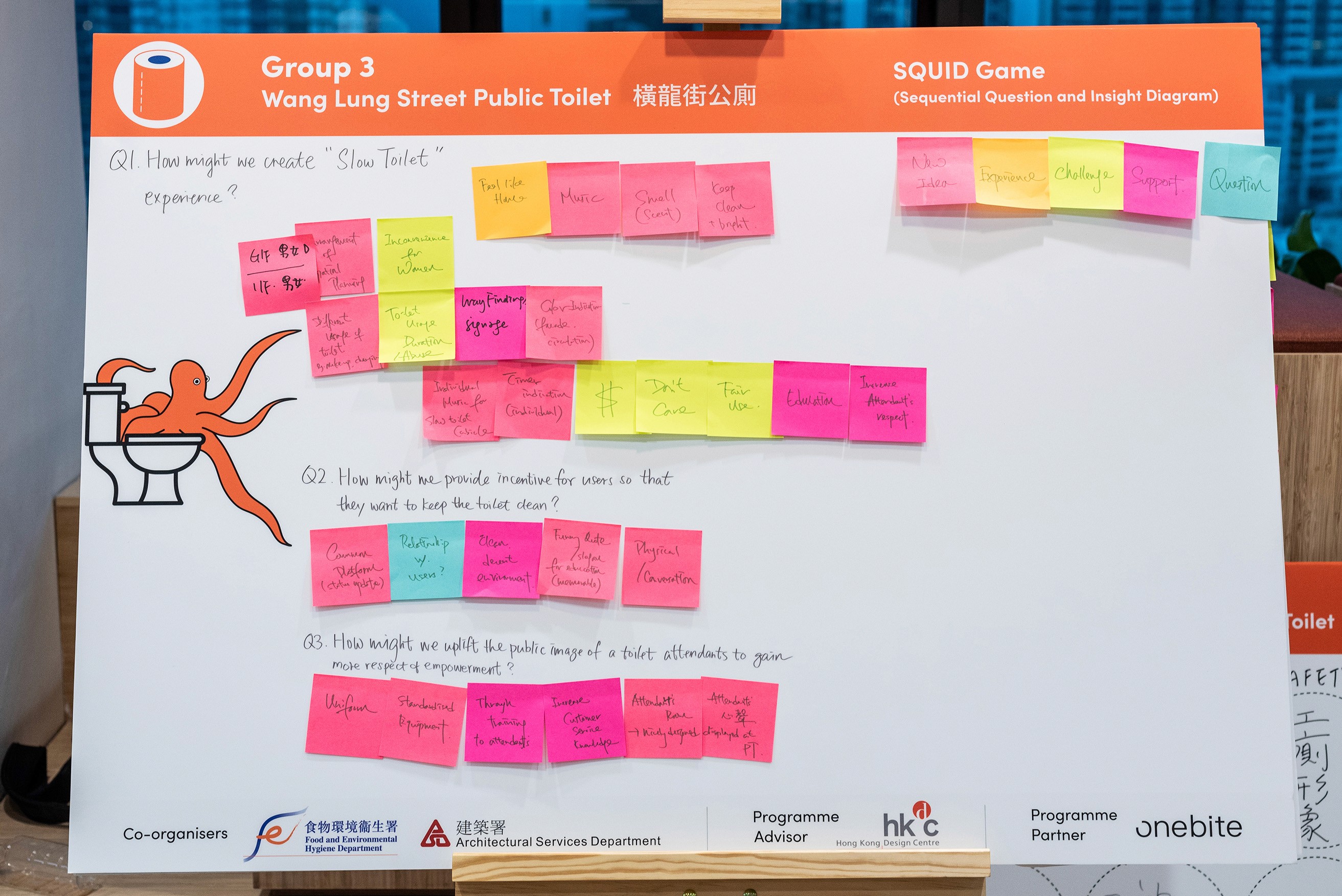
Alongside this, I was actively involved in the research and engagement process, including field observations, stakeholder mapping and public workshops. To build empathy and uncover real needs, the project began with selecting Tsuen Wan and Kwai Tsing as pilot districts because they contained the widest range of public toilet types. Five representative toilets were chosen and used as real case studies throughout the programme. We conducted field visits to observe how people used the spaces and how frontline staff worked, alongside conversations with cleaners and users to uncover everyday frustrations and unmet needs.
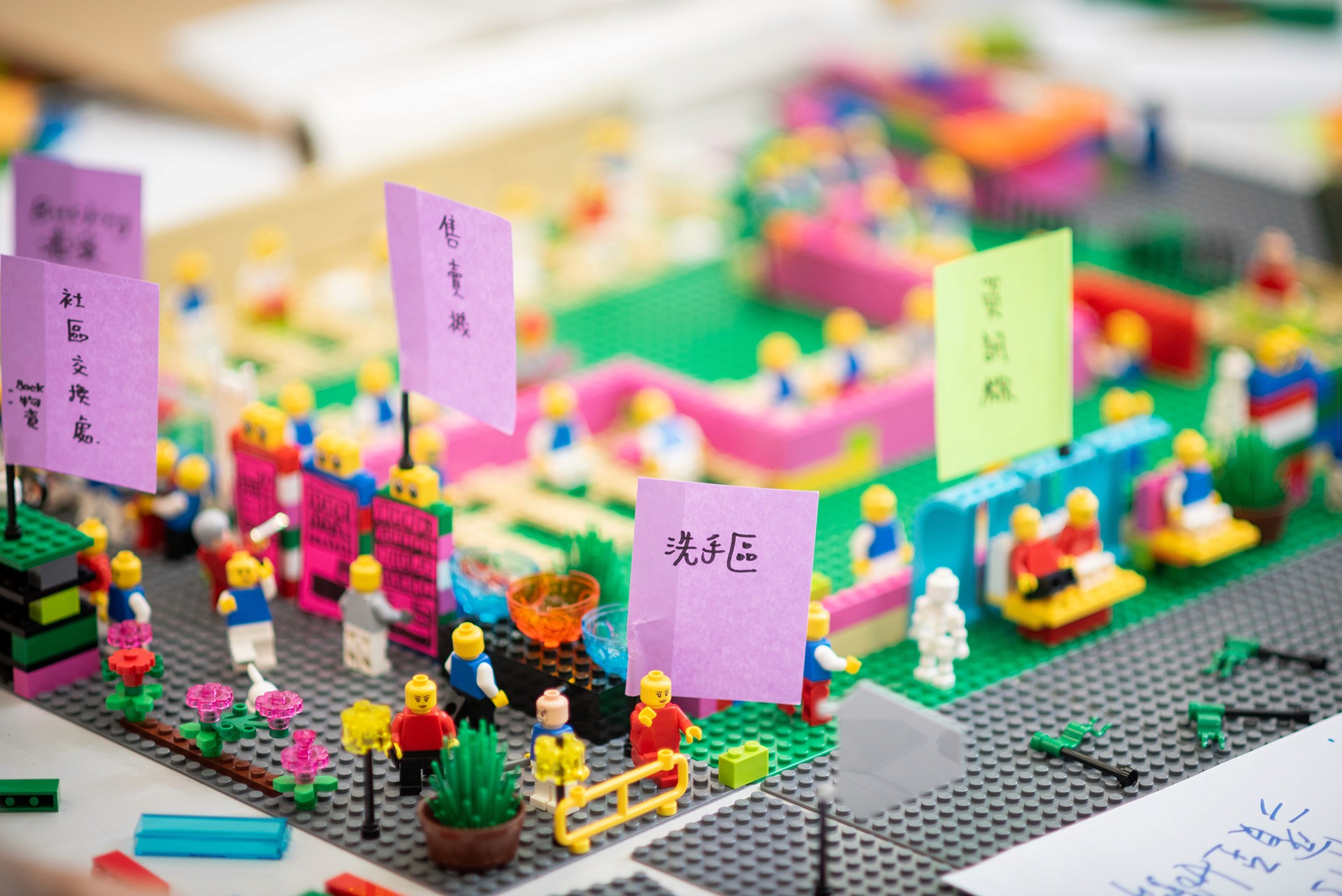
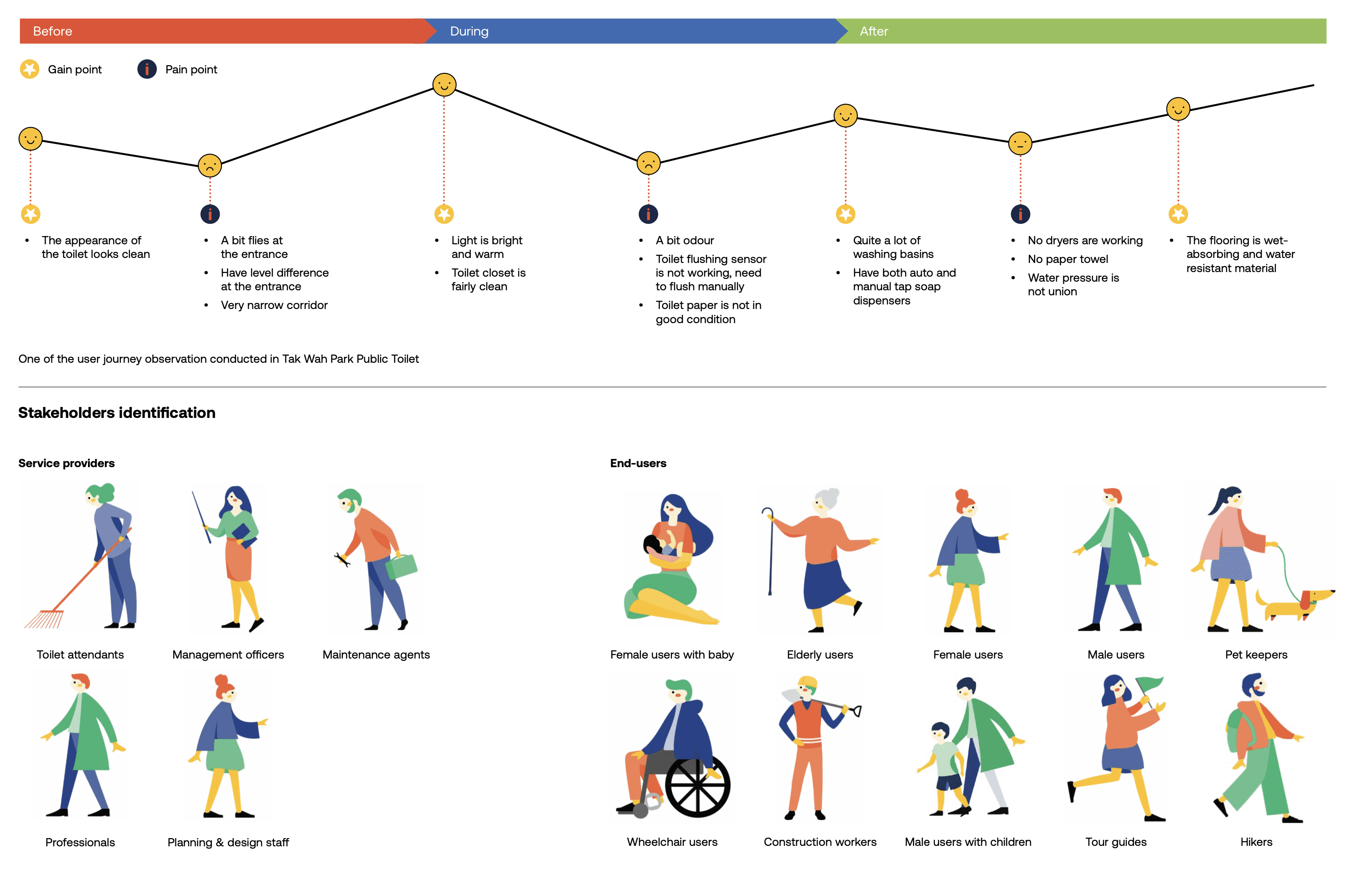
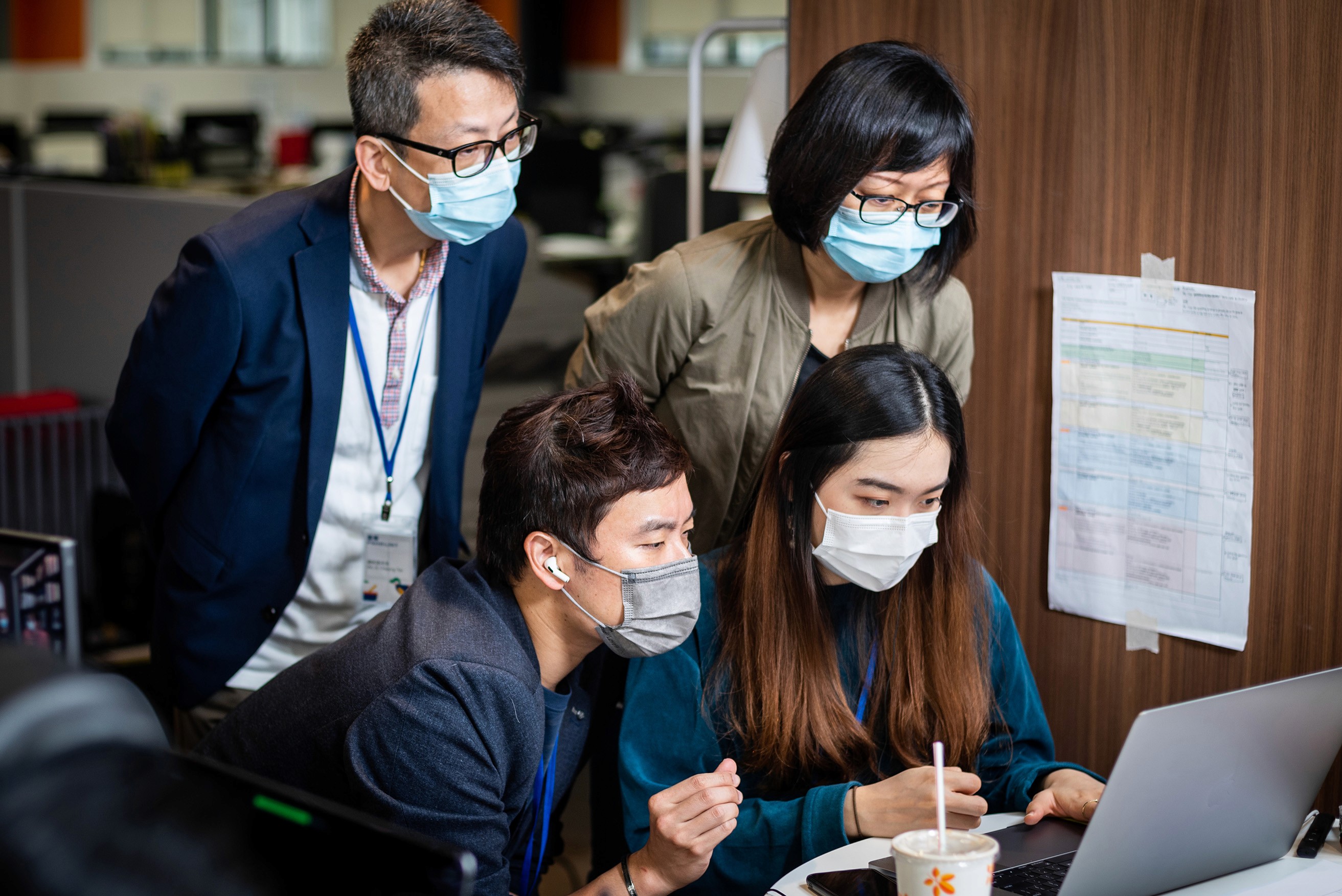
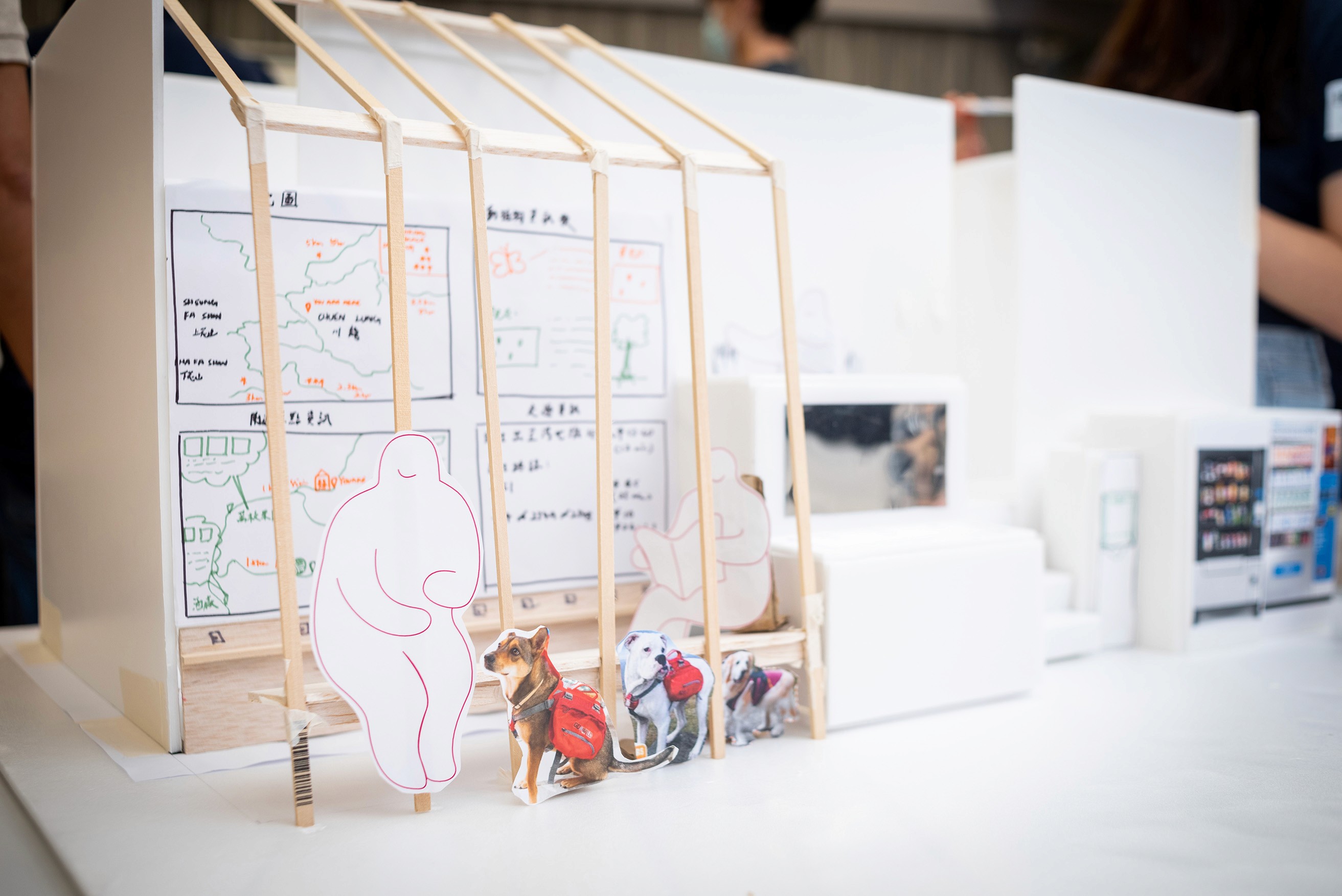
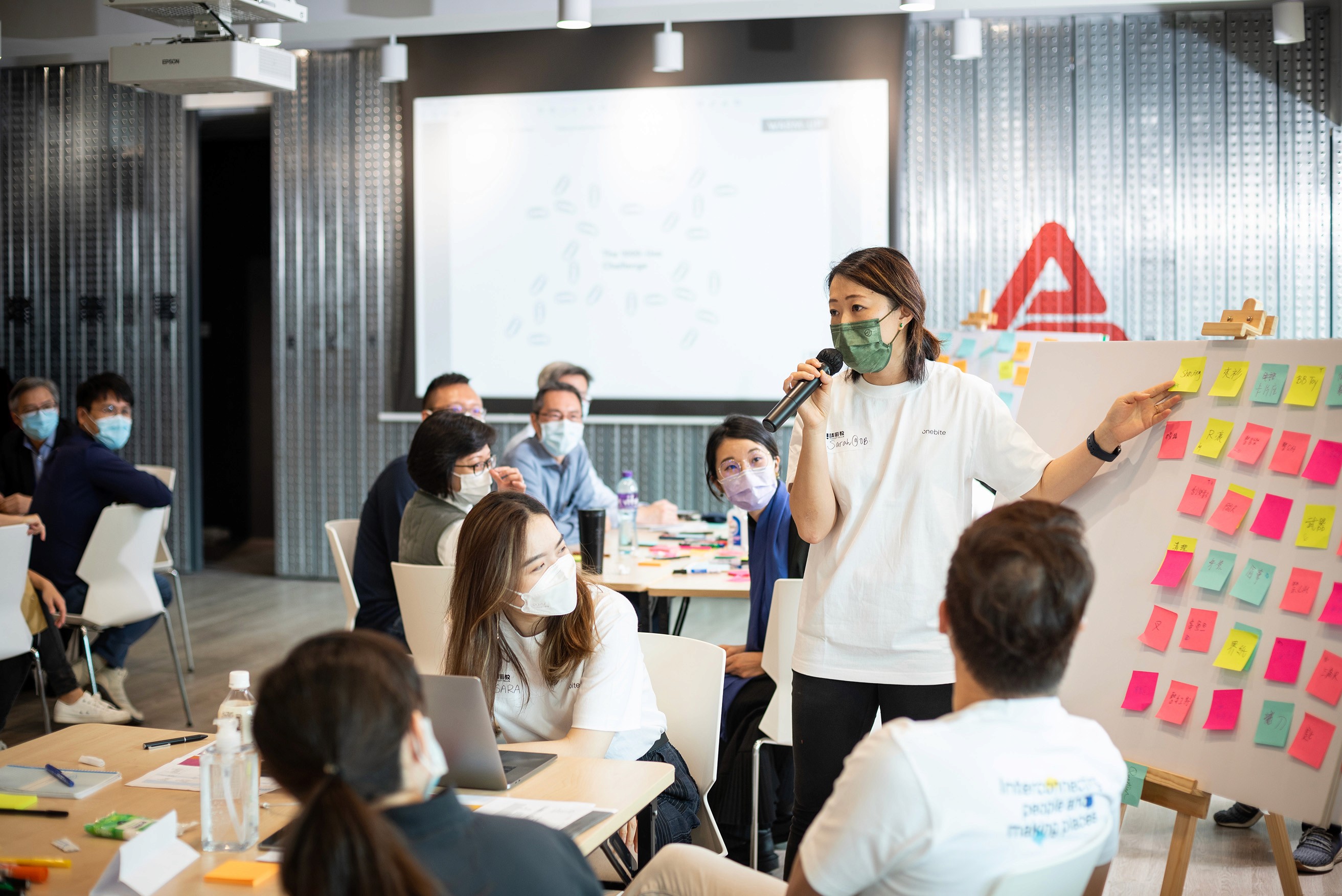
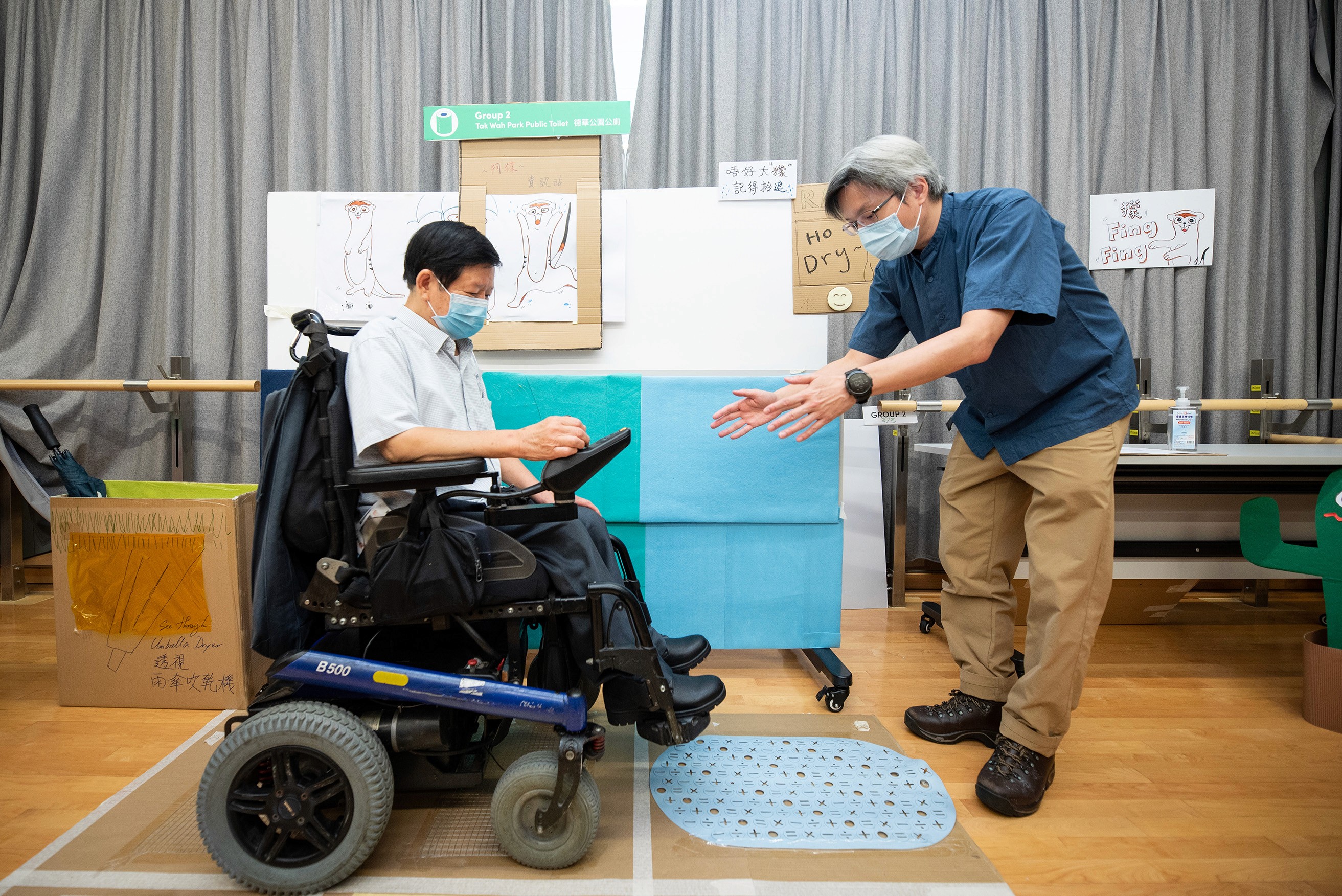
This was supported by ethnographic observation of user journeys and staff routines, which helped us identify key stakeholders and the complexity of the service system. These insights fed into a series of co-design workshops structured around the Double Diamond Design Thinking framework. Members of the public, professionals and government staff worked together to explore needs, reframe problems and develop ideas, building empathy before moving towards solutions.
RESULT & IMPACT
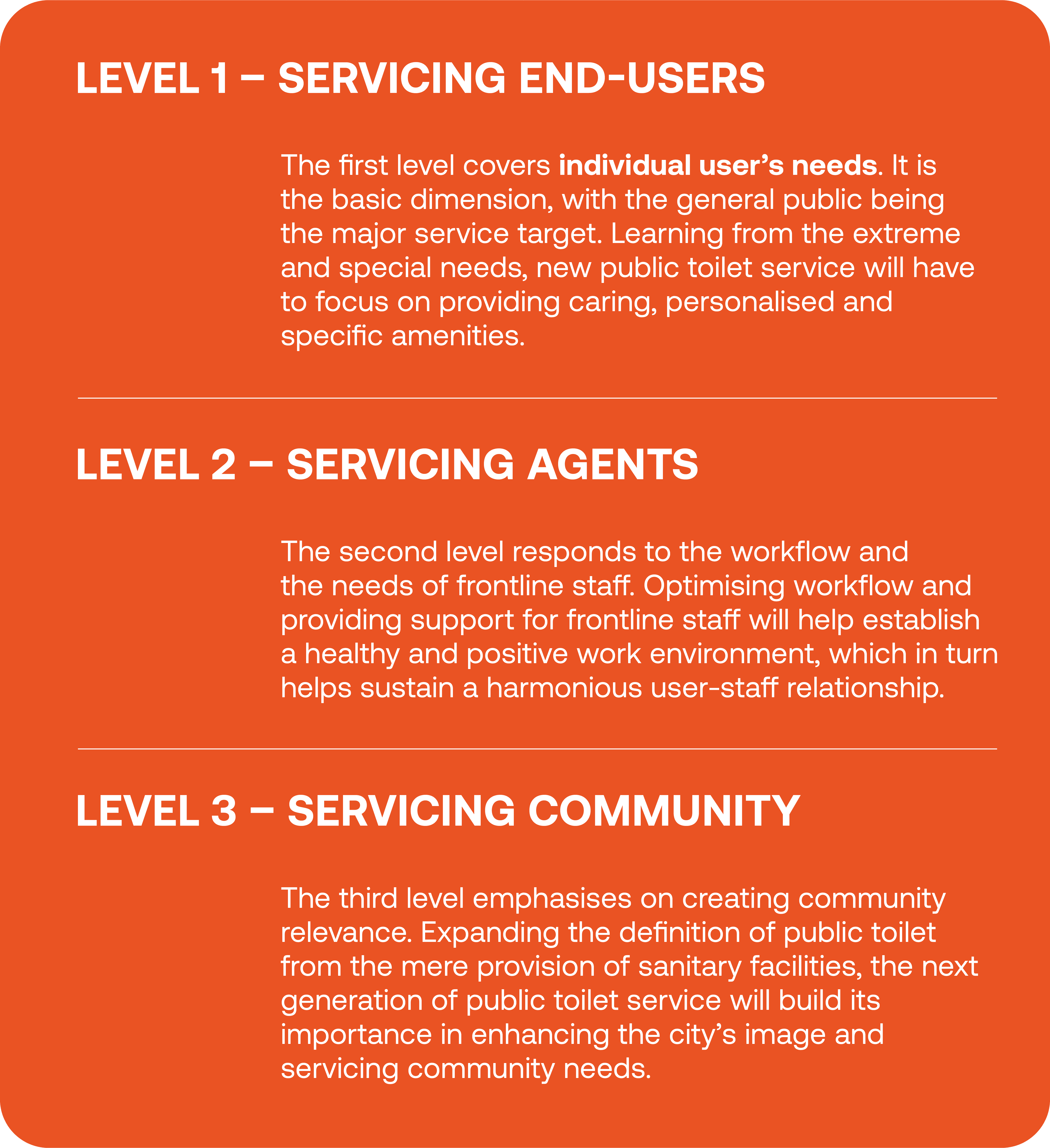
The workshops revealed that public toilet service needs to be understood on three interconnected levels: the needs of individual users, the workflow and wellbeing of frontline staff, and the role of toilets in the wider community. This led to a shift away from viewing toilets purely as facilities, towards seeing them as a public service ecosystem.
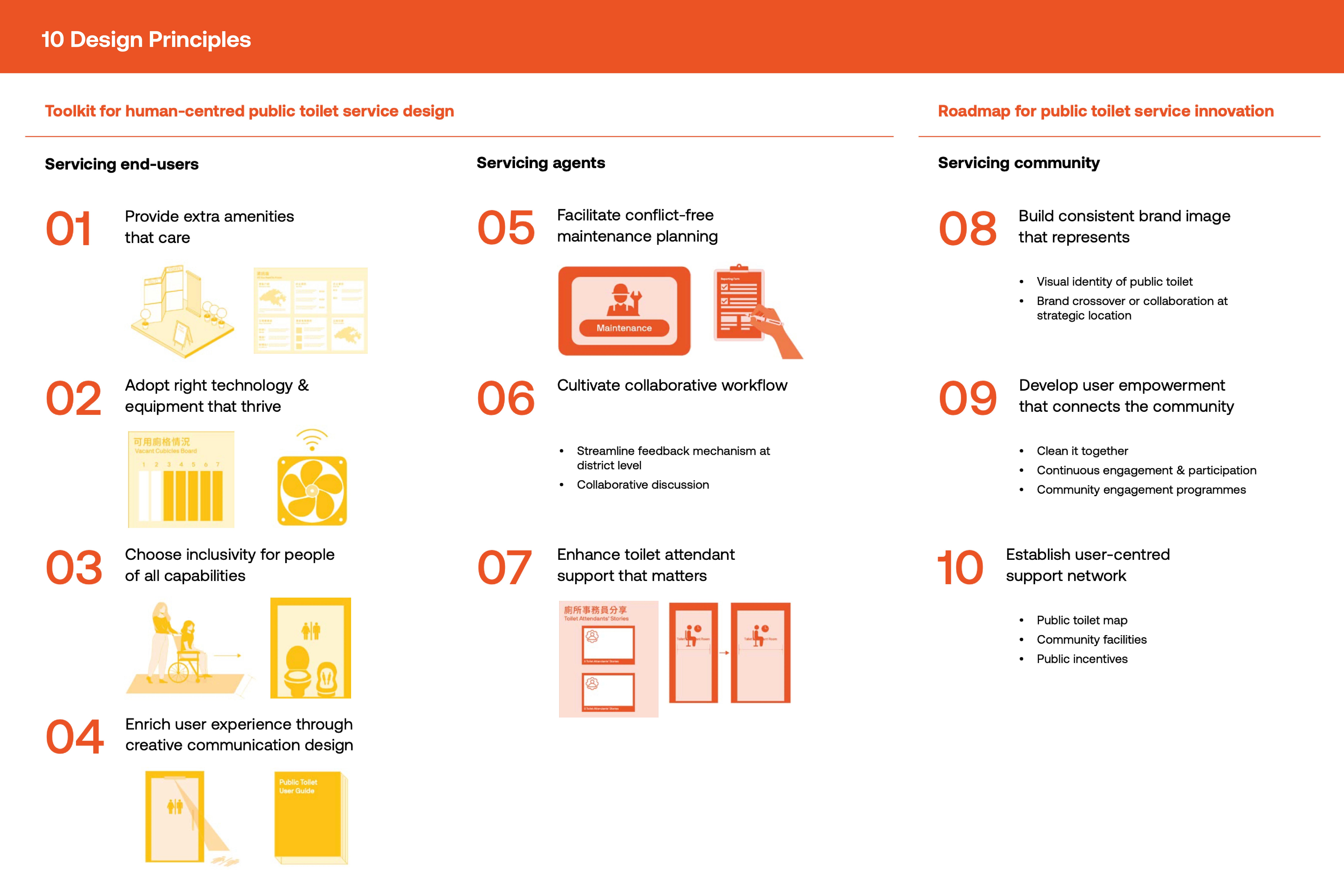
From these insights, ten design principles were developed to address the pain points and aspirations of users, staff and communities. These principles formed the foundation of two key outputs: the Toolkit for Human-centred Public Toilet Service Design and the Road Map for Public Toilet Service Innovation.
The toolkit focuses on site-level improvements, providing practical guidance for designing amenities, layouts and services that respond to real user behaviour and frontline needs. The roadmap looks at the bigger picture, offering strategic direction for policy, management and long-term service development across the city.
The former focuses on a micro, site-specific scale, offering recommendations and action items that bring about immediate enhancements; the latter as a strategy plan for mid and long-term policy changes.
“Toilet Tells” has provided a valuable opportunity for me and the team to go beyond a problem-solving perspective and adopt a user-centred approach, facilitating innovative public toilet service. It demonstrated the possibility of co-developing public toilet service innovation with all stakeholders, including the general public, professionals, and government agents.
"Public toilets are more than facilities for meeting basic human needs; instead, they should be designed as a holistic public service providing optimal and inclusive experiences for end-users."
– Chairman, Hong Kong Design Centre
"Proposals from participants cover more than basic needs, demonstrating a sense of stakeholder empathy."
– Inclusive Designer & Associate Professor, The Hong Kong Polytechnic University School of Design
Next Projects